
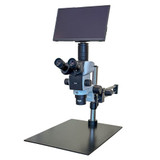
Stereo Microscope Requirements for High Magnification Inspection in Additive Manufacturing & 3D Printed Microstructures
Feb 20th 2026
Additive manufacturing (AM) and micro‑scale 3D printing have unlocked designs that traditional machining can’t touch; lattice structures, microfluidic channels, conformal cooling, and ultra‑fine surface textures engineered for performance. But the same complexity that makes these parts valuable also makes them harder to inspect.
Whether you’re reviewing layer lines on polymer prints, c
…
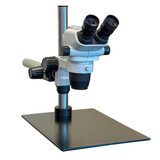
Calibrating a Stereo Microscope for Precision Measurement: Methods, Standards, and Error Sources
Dec 11th 2025
Stereo microscopes are widely used in industrial inspection, research laboratories, semiconductor work, micro-assembly, medical device manufacturing, and quality assurance. Although they’re essential for dimensional inspection and documentation, stereo microscopes are not inherently calibrated for accurate measurement.
If your lab relies on dimensional data for QA/QC, regulatory compliance,
…
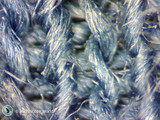
What Are Stereo Microscopes Used For?
Mar 24th 2025
Discovering the World of Stereo Microscopes: A Close-Up Adventure
Imagine having a superpower that lets you see incredibly tiny details of objects without squishing or changing them - that's exactly what a stereo microscope does! Unlike traditional microscopes that look at super tiny cells, stereo microscopes are designed to give you a 3D view of larger small things with some amazing applications:
…
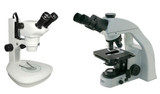
Difference Between Compound & Dissecting Microscopes
Mar 19th 2024
Microscopes play a crucial role in scientific research, allowing scientists to observe objects and organisms at the microscopic level. Two common types of microscopes used in laboratories and educational settings are compound microscopes and dissecting microscopes. While both serve the purpose of magnifying objects for observation, they differ in their design, applications, and functionalities.
Di
…


