
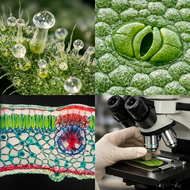
Plant Research Under the Microscope: Imaging Trichomes, Stomata, and Leaf Microstructures
Feb 27th 2026
Plants may appear simple from a distance, but under magnification they reveal an intricate world of specialized cells and structures. From defensive hairs to microscopic pores that regulate gas exchange, the surface of a leaf is a complex and highly organized system. Modern microscopy allows researchers, educators, and growers to explore these features in remarkable detail.
In this article, we take a closer look at three key plant microstructures, trichomes, stomata, and internal leaf tissues, and discuss how microscopy techniques make their study possible.
Why Microscopy Matters in Plant Research
Plant biology relies heavily on imaging. Many of the most important physiological processes in plants occur at the cellular level. Photosynthesis, transpiration, nutrient transport, and defense mechanisms are all tied to structures that cannot be fully understood without magnification.
Microscopes allow researchers to:
- Analyze plant health and stress responses
- Study developmental stages
- Examine structural adaptations
- Identify pathogens and surface damage
- Compare species characteristics
Whether using a compound microscope for thin cross sections or a stereo microscope for surface imaging, magnification provides insights that are invisible to the naked eye.
Trichomes: The First Line of Defense
Trichomes are small hair like outgrowths that develop from the epidermis of leaves and stems. While they may appear simple, they serve a wide range of functions depending on the plant species.
Types of Trichomes
Under magnification, trichomes reveal structural diversity:
- Non glandular trichomes provide physical protection against insects and environmental stress.
- Glandular trichomes secrete oils, resins, or defensive compounds.
- Branched or stellate trichomes increase surface coverage for enhanced protection.
Using a stereo microscope, researchers can observe trichome density and distribution patterns across the leaf surface. A compound microscope offers greater detail, allowing visualization of secretory cells within glandular trichomes.
Research Applications
Microscopic analysis of trichomes helps scientists:
- Study plant defense mechanisms
- Evaluate resistance to pests
- Assess environmental stress adaptation
- Examine secondary metabolite production
High resolution imaging is particularly valuable in agricultural and botanical research where trichome characteristics can influence crop performance and protection strategies.
Stomata: Gatekeepers of Gas Exchange
Stomata are microscopic pores located primarily on the underside of leaves. Each stoma consists of two guard cells that control the opening and closing of the pore.
These structures regulate:
- Carbon dioxide intake for photosynthesis
- Oxygen release
- Water vapor loss through transpiration
Viewing Stomata Under the Microscope
Stomata are best observed using a compound microscope. A simple leaf peel or clear nail polish impression can reveal detailed stomatal patterns.
Under magnification, researchers can examine:
- Stomatal density
- Guard cell shape
- Opening width
- Distribution patterns across species
Advanced imaging techniques allow for quantitative measurements, which are critical in climate studies and plant physiology research.
Why Stomatal Imaging Is Important
Stomatal behavior is closely linked to environmental conditions. Changes in light intensity, humidity, temperature, and carbon dioxide levels all influence pore movement.
By imaging stomata, researchers can:
- Study plant responses to drought stress
- Monitor environmental adaptation
- Compare species resilience
- Investigate the effects of elevated carbon dioxide
This information supports research in agriculture, forestry, and climate science.
Leaf Microstructures: A Cross Section of Complexity
While surface features like trichomes and stomata are fascinating, the internal architecture of a leaf is equally impressive. Thin cross sections reveal layers of specialized tissues that support photosynthesis and transport.
Key Leaf Tissues Visible Under Magnification
When viewed under a compound microscope, a cross section of a leaf typically shows:
- Upper epidermis for protection
- Palisade mesophyll packed with chloroplasts
- Spongy mesophyll with air spaces for gas diffusion
- Vascular bundles containing xylem and phloem
- Lower epidermis often rich in stomata
Proper slide preparation is essential for clear imaging. Staining techniques enhance contrast and help differentiate tissue types.
Applications in Research and Education
Microscopic examination of leaf cross sections allows researchers and students to:
- Understand photosynthetic efficiency
- Study nutrient transport systems
- Identify structural adaptations
- Compare monocot and dicot anatomy
In academic settings, these observations form the foundation of plant anatomy education. In research labs, they provide insights into plant performance and stress response.
Choosing the Right Microscope for Plant Imaging
Different structures require different imaging approaches.
- Stereo microscopes are ideal for surface features such as trichomes and overall leaf morphology.
- Compound microscopes are best for cellular details, stomata, and thin tissue sections.
- Digital microscopes allow image capture for measurement, documentation, and analysis.
Magnification range, illumination type, and camera compatibility all play important roles in plant research applications. Brightfield illumination is commonly used, but phase contrast and fluorescence microscopy can provide enhanced detail in specialized studies.
Advancing Plant Science Through Microscopy
From defense mechanisms to gas exchange and internal tissue organization, plant structures are intricately designed systems that support survival and growth. Microscopy continues to expand our understanding of these systems by providing precise, detailed visualization.
As imaging technology advances, researchers gain access to improved resolution, digital measurement tools, and enhanced documentation capabilities. These tools support innovation in agriculture, environmental science, and botanical research.
Exploring plant structures under the microscope not only deepens scientific knowledge but also reveals the remarkable complexity hidden within every leaf.
For researchers, educators, and laboratories seeking reliable imaging solutions, selecting the right microscope is an essential step toward uncovering the microscopic world of plants.


