
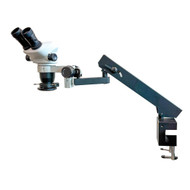
Best Microscope for Engraving Jewelry
Mar 20th 2026
Engraving jewelry requires precision, control, and the ability to clearly see fine detail without sacrificing comfort. A standard microscope won’t always cut it. The wrong setup can limit your working space, distort depth, or cause fatigue during long sessions.
If you’re looking for the best microscope for engraving, it’s important to understand what actually matters for hands-on work and how engraving microscopes differ from traditional gemological models.
What Makes a Microscope Good for Engraving?
Not all microscopes are designed for active bench work. Engraving requires a specific combination of features that allow you to work comfortably while maintaining accuracy.
1. Working Distance
This is one of the most important factors. You need enough space between the lens and your workpiece to use engraving tools freely. A microscope with limited working distance will quickly become frustrating.
2. Stereo Vision (Depth Perception)
Engraving is a three-dimensional task. Stereo microscopes provide depth perception, allowing you to judge cuts and angles accurately. Flat or digital-only views don’t offer the same level of control.
3. Moderate Magnification
Higher magnification isn’t always better. Most engraving work is done comfortably in a lower to mid range, where you can see detail without losing context of the piece.
4. Lighting
Consistent, shadow-free lighting is essential. Ring lights are commonly used because they evenly illuminate the work area without interfering with tools.
5. Ergonomics
Long engraving sessions demand a comfortable setup. Adjustable viewing angles and proper positioning help reduce strain and improve consistency in your work.
Engraving vs Gemological Microscopes
This is where many buyers get confused.
Gemological microscopes are designed primarily for:
- gemstone inspection
- grading and analysis
- identifying inclusions
They often include features like darkfield illumination and higher magnification for detailed viewing.
Engraving microscopes, on the other hand, are built for:
- hands-on work
- tool clearance
- stability and positioning
That said, there is overlap. Many high-quality stereo microscopes used in gemology can also perform very well for engraving, as long as they provide enough working distance and ergonomic flexibility.
This is why you’ll often see professional jewelers use versatile stereo microscopes for both inspection and engraving tasks.
If you’re exploring options, you can browse a range of engraving microscopes and jewelry microscopes here :
https://www.microscopeworld.com/professionals/gemological-microscopes/
Recommended Microscope for Engraving Jewelry
If you’re looking for a reliable option that balances clarity, usability, and comfort, the Fein Optic FZ8 Engraving & Jewelry Design Microscope is a strong choice.
View product:
https://www.microscopeworld.com/fein-optic-fz8-engraving-jewelry-design-microscope/
Why it works well for engraving:
- Designed with jewelry work in mind
- Provides the working distance needed for engraving tools
- Stereo optics for accurate depth perception
- Stable and practical setup for bench use
Rather than being overly specialized, it offers the kind of flexibility most engravers and jewelers need for daily work.
Who Should Use an Engraving Microscope?
Engraving microscopes are useful for a wide range of professionals, including:
- Jewelry engravers
- Stone setters
- Bench jewelers
- Watchmakers
- Designers working on fine detail
Even if engraving isn’t your primary task, having a microscope that supports hands-on work can significantly improve precision and efficiency.
Frequently Asked Questions
What magnification is best for engraving?
Most engraving work is done at lower to mid magnification. This provides enough detail while still allowing you to see the full working area.
Can you use a gemological microscope for engraving?
Yes, as long as it’s a stereo microscope with adequate working distance and a comfortable setup. Many jewelers use the same microscope for both inspection and engraving.
Do you need a special stand for engraving microscopes?
A stable stand or boom arm can make a big difference. It allows better positioning and improves comfort during extended use.
Is lighting important for engraving microscopes?
Absolutely. Even lighting, such as a ring light, helps reduce shadows and improves visibility while working on fine details.
Choosing the Right Microscope for Your Work
The best engraving microscope isn’t just about magnification or optics. It’s about how well the microscope fits your workflow.
Look for a setup that:
- gives you room to work
- provides clear, stable viewing
- keeps you comfortable over time
With the right microscope, engraving becomes more precise, more consistent, and far more enjoyable.


